

- 6.0
Key Points
- IT Administrators: manage multi-location EO.workspace access from a single entry point while keeping routing policy under operational control.
- Infrastructure Teams: route users across sites, providers, or regions using endpoint health, priority, weight, session state, metrics, and latency.
- Operations Teams: improve resilience by detecting unavailable locations and directing users to working alternatives.
- Support Teams: reduce login friction by keeping users attached to existing sessions when their location is available.
- Business Leaders: support distributed, hybrid, and disaster-recovery architectures with no additional costs.
One Entry Point for Multi-Location EO.workspace
Route every user to the right location, without making access depend on manual site selection.
Distributed application and desktop delivery becomes harder when users, datacenters, gateways, and Session Managers are spread across multiple locations. A user may need to reconnect to an existing session, be redirected away from an unavailable site, or be placed where capacity and network conditions are better.
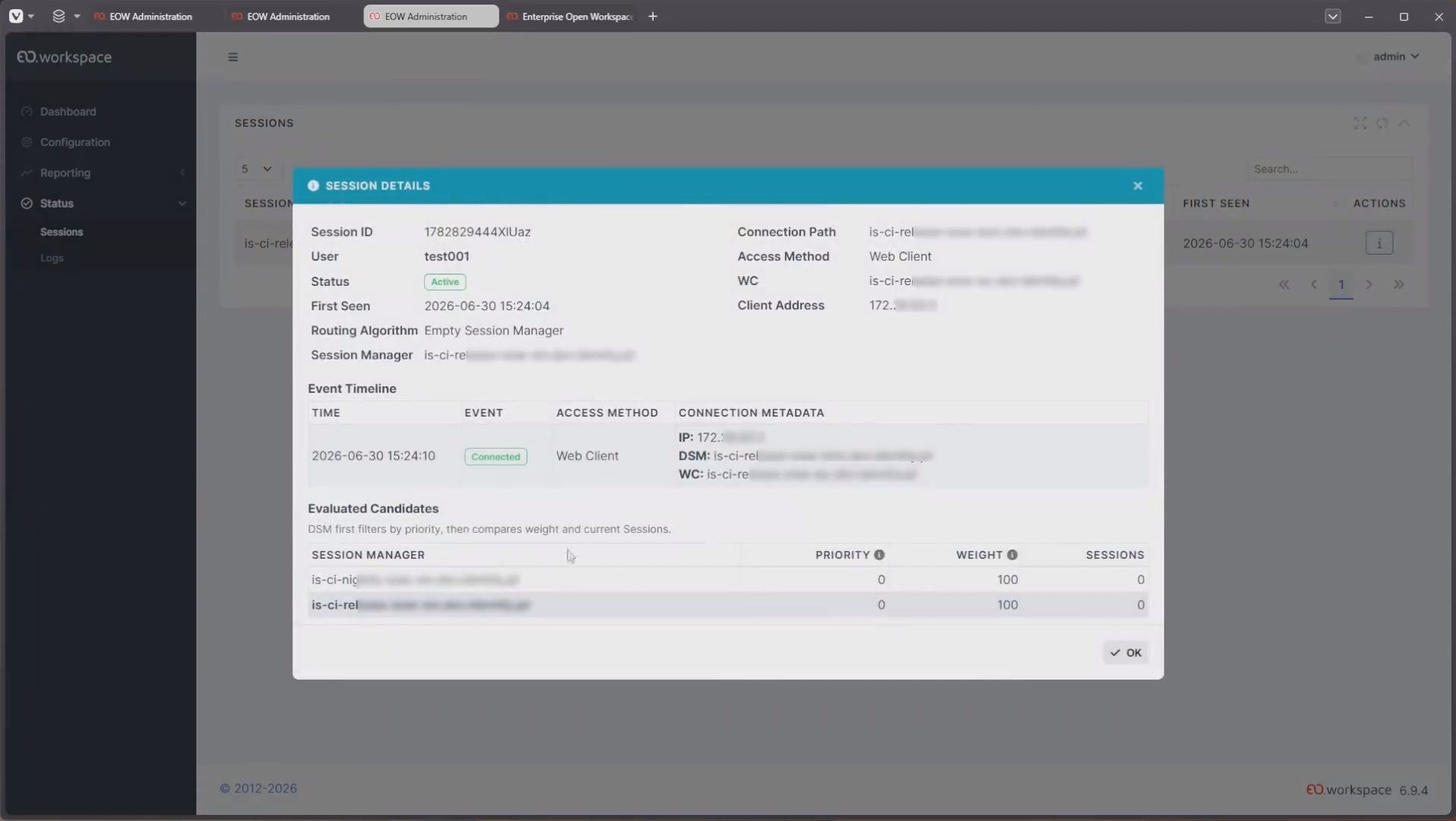
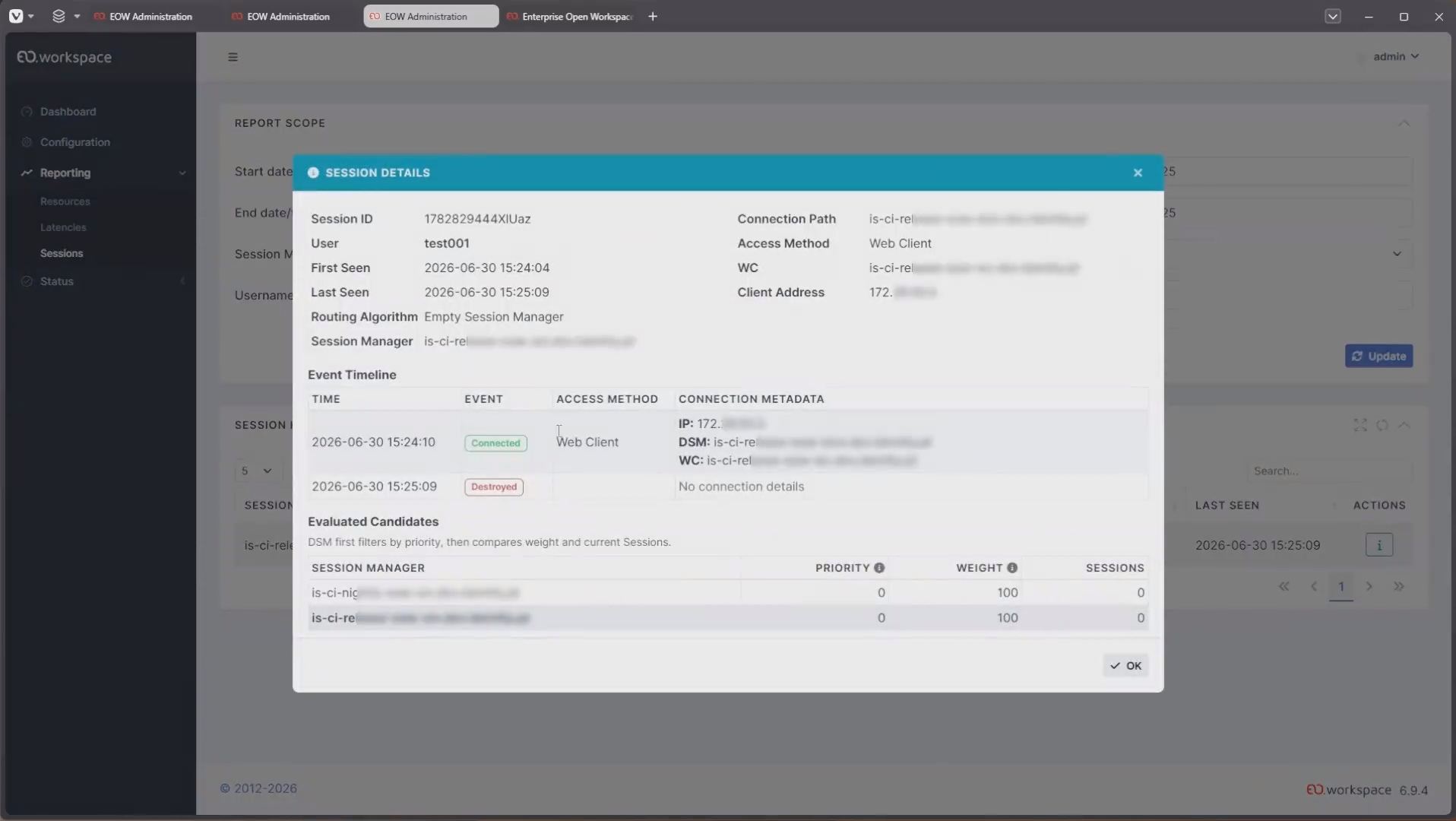
EO.workspace Distributed Session Manager, or DSM, acts as the routing layer for multi-location deployments. It receives health, session, licensing, workstation, performance, and latency information from participating locations, then uses that state to select the most appropriate destination for web, native, and supported mobile access flows.
The result is a cleaner user experience and a more controllable operating model: users start from one DSM address, while administrators retain visibility and control over endpoint availability, routing inputs, balancing settings, and recovery behavior.
🌍 Multi-Location Access Without User Guesswork
DSM provides a single user-facing entry point for environments with several EO.workspace locations. Users do not need to know which datacenter, provider, or region should handle their session. DSM evaluates available locations and redirects the session flow to a suitable endpoint.
🔁 Session-Aware Routing
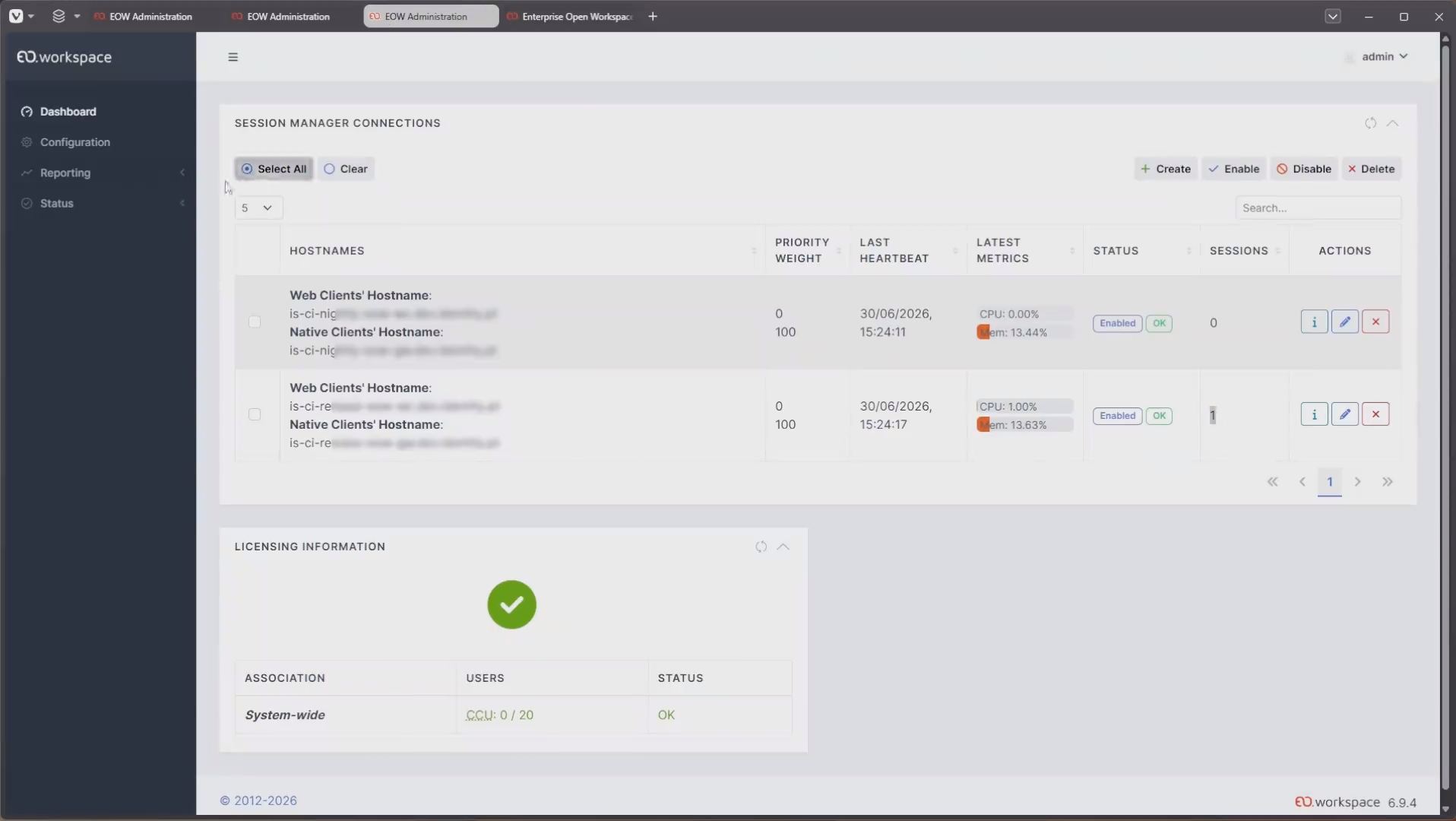
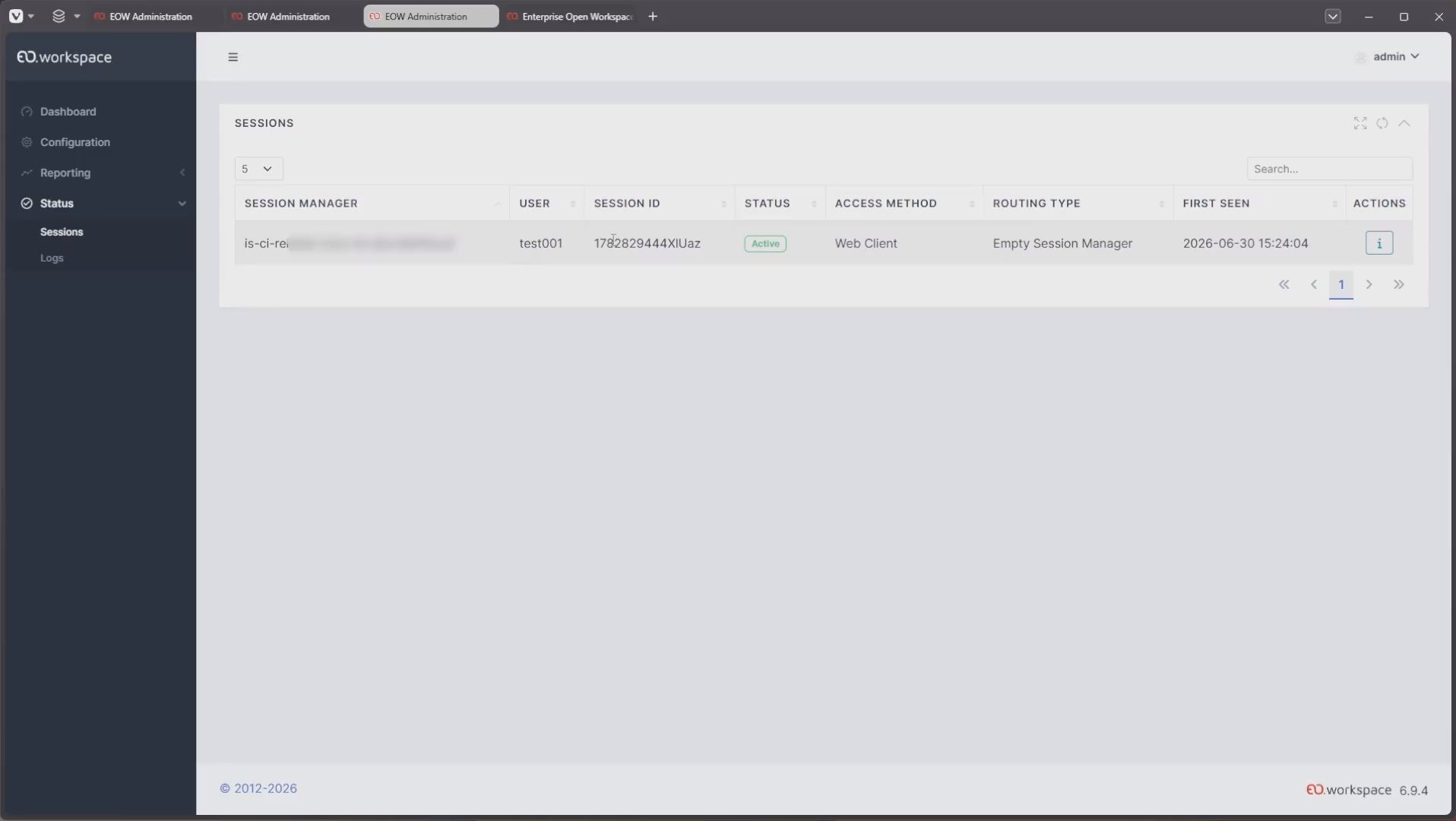
When a user already has a known session in an available location, DSM can route the user back to that location. This helps users resume work instead of being placed randomly on another site.
📊 Smarter Placement Decisions
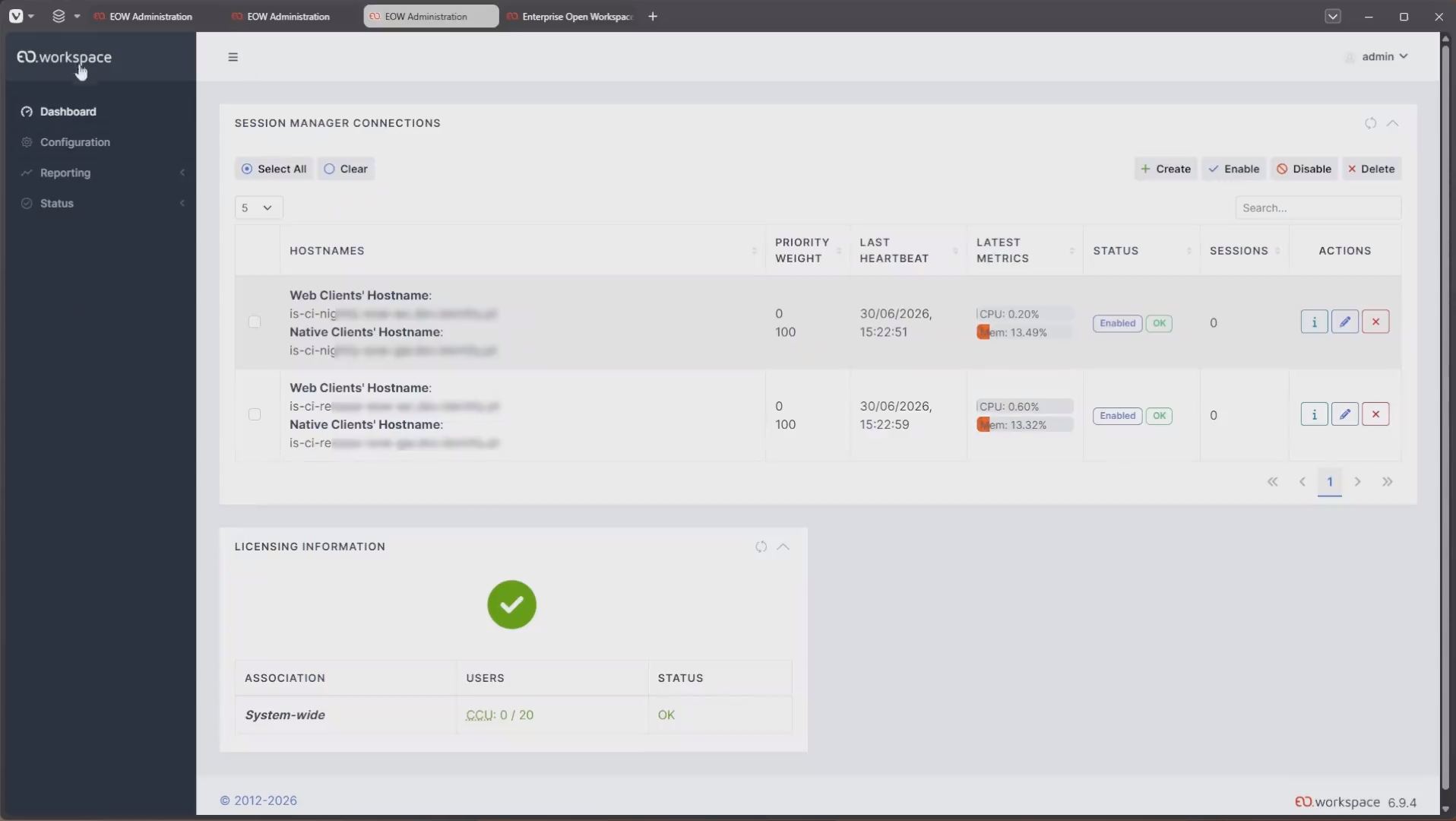
DSM supports priority and weight-based routing, and advanced balancing can include CPU usage, available memory, and client-reported latency. Browser login and native client flows can provide latency inputs so routing decisions reflect both server condition and the user’s current network path.
🛡️ Resilient Recovery for Distributed Deployments
DSM tracks endpoint health through Session Manager heartbeats. If a location becomes unavailable, DSM can exclude it from normal routing and use available alternatives. When a location recovers after an outage, DSM uses heartbeat-based reconciliation to help resolve cross-location duplicate sessions. Local fallback cleanup remains a degraded-mode safety mechanism rather than the normal duplicate-resolution path.
🧭 Operational Visibility and Administration
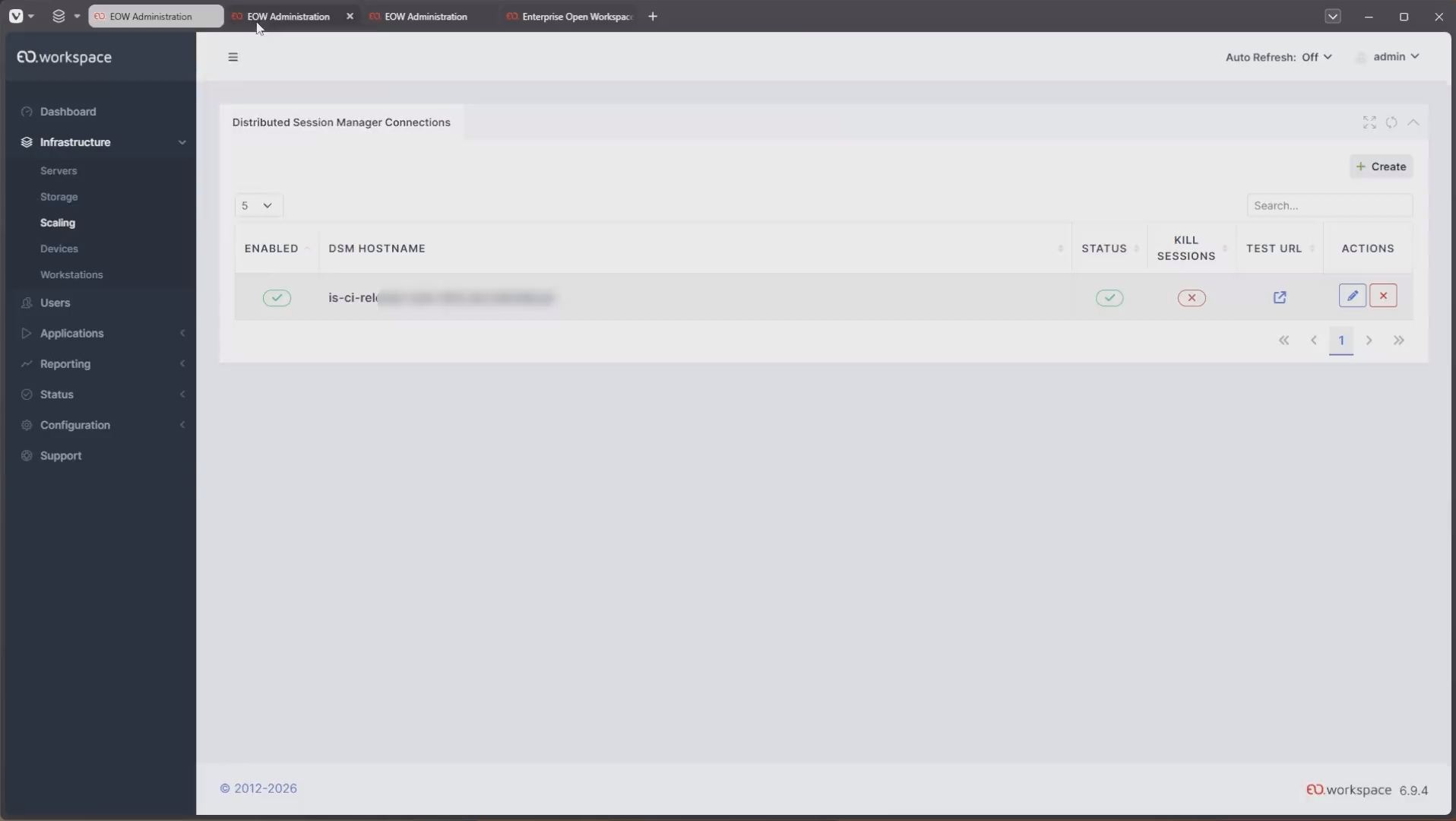
DSM includes its own administration surface for endpoint state, sessions, logs, metrics, latency reporting, and balancing settings. Administration integrates with Session Manager-backed identities and DSM-specific permissions, with emergency local credentials available for loss-of-location scenarios.
Ready to simplify multi-location access?
Recommended For You

CIS Virtualizes Bank Branches
CIS Virtualizes Bank Branches
NOS Virtualizes Critical Applications
NOS Virtualizes Critical Applications
CHBV Optimizes Workstation Costs